

Keeping up with environment news from China
Provided by AGP
Zhejiang University Study Highlights Toxic Metal Risks in Rural Air
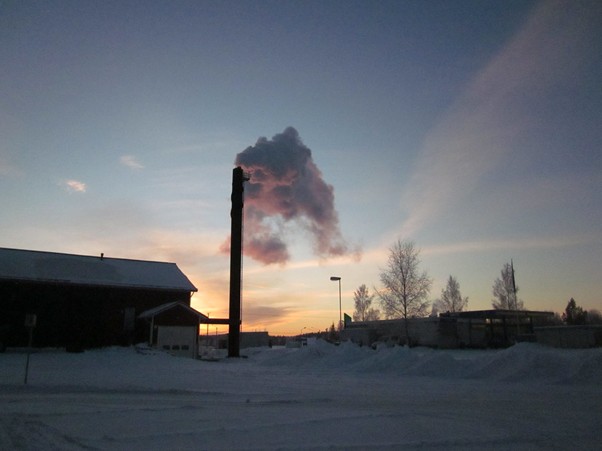
Researchers from Zhejiang University studied PM2.5-bound metallic particles in rural and urban North China air during wintertime to understand their sources and potential health risks.
Study finds smaller toxic metal particles in villages may increase health risks for rural residents in North China
CHINA, May 25, 2026 /EINPresswire.com/ -- Researchers found that toxic metal particles in rural North China air are smaller and potentially more harmful than those in urban areas. The study showed that village pollution was strongly linked to biomass and coal burning, while urban pollution was mainly associated with dust-related mineral particles. The findings highlight the overlooked health risks faced by rural populations exposed to PM2.5-bound heavy metals.Air pollution caused by fine particulate matter, known as PM2.5, is among the leading environmental health threats worldwide. These tiny airborne particles can carry toxic metallic elements such as lead, zinc, chromium, and iron, which are associated with respiratory illness, cardiovascular disease, neurological damage, and increased cancer risk. While air pollution studies have largely focused on major cities, rural regions—where millions of people still depend on solid fuels such as biomass and coal—remain far less studied.
A new study led by Professor Weijun Li and Dr. Xiaokun Ding from Zhejiang University has revealed that toxic metal particles in village air in North China may pose greater health risks than similar particles found in urban environments. The research investigated PM2.5-bound metallic elements in village and urban air during wintertime in the North China Plain. Using transmission electron microscopy (TEM) combined with bulk PM2.5 chemical analysis, the researchers examined the concentration, morphology, mixing state, and size distribution of airborne metal particles. This paper was made available online on February 25, 2025, and was published in Issue 158 of Journal of Environmental Sciences on July 12, 2025.
The study compared air samples collected from Lijing Village in Binzhou City and urban Jinan City in Shandong Province. Researchers found that total concentrations of 16 metallic elements were similar in both locations, reaching around 3439 ng/m³ in village air and 3555 ng/m³ in urban air. Potassium (K), calcium (Ca), and iron (Fe) were the dominant elements, accounting for more than 75% of total metal content.
However, the nature of the particles differed significantly between the two environments. In urban air, mineral particles linked to dust were the dominant form of metal-bearing particles. In contrast, village air contained large numbers of potassium-rich particles associated with residential biomass burning. “Our results reveal that village and urban metallic elements presented obvious differences,” said Prof. Li. “The village air was mainly influenced by residential biomass burning, while urban air was more strongly affected by dust sources.”
The researchers identified six major categories of metal-bearing particles, including, K-rich particles, mineral particles, fly ash, Fe-rich particles, Zn-rich particles, and Pb-rich particles. Among these, fly ash, iron-rich, zinc-rich, and lead-rich particles were considered especially toxic because of their known effects on human health. Lead exposure, for example, has been linked to neurological damage and reduced cognitive development in children, while iron-bearing nanoparticles have been associated with neurodegenerative diseases.
One of the study’s most important findings was that toxic particles in village air were considerably smaller than those in urban air. Toxic metal particles measured an average of 243 nanometers in village air, compared with 337 nanometers in urban air.
Because smaller particles can penetrate deeper into the lungs and more easily enter the bloodstream, they are considered potentially more harmful to human health.
“Compared to urban sites, toxic metals in village air exhibited smaller particle sizes, further posing higher health risks for village residents,” said Dr. Ding.
The study also highlighted how household fuel use contributes to rural pollution. Researchers observed that many residents in the village still relied on biomass and coal for cooking and winter heating, generating smoke particles rich in metallic elements.
Researchers noted that previous research on atmospheric heavy metals has mainly concentrated on cities, despite the fact that rural populations may face significant exposure to toxic particles from household fuel combustion.
“Atmospheric metal pollution in village regions should receive more attention in the future,” Prof. Li concluded.
The findings provide important insight into the overlooked problem of rural air pollution and could support future efforts to improve air-quality policies, reduce household solid-fuel use, and protect vulnerable populations from toxic airborne metals.
Reference
Title of original paper: PM2.5-bound metallic elements in village and urban airs in North China during wintertime: Concentration, morphology, mixing state, and size distribution
Journal: Journal of Environmental Sciences
DOI: https://doi.org/10.1016/j.jes.2025.02.025
About Zhejiang University
Zhejiang University is one of China’s leading research universities, renowned for its excellence in science, engineering, medicine, agriculture, and environmental studies. Founded in 1897 and located in Hangzhou, the university is committed to advancing global scientific innovation and interdisciplinary research to address major societal and environmental challenges.
Website: https://www.zju.edu.cn/english/
About Professor Weijun Li from Zhejiang University
Prof. Weijun Li is a Professor in the Department of Atmospheric Sciences at Zhejiang University whose research focuses on atmospheric chemistry, aerosols, air pollution, and the microscopic analysis of airborne particles. His work combines advanced electron microscopy techniques with environmental science to investigate the sources, transformation, and health impacts of atmospheric particulate matter, particularly fine particles linked to biomass burning, urban pollution, and climate processes.
About Dr. Xiaokun Ding from Zhejiang University
Dr. Xiaokun Ding is a researcher in the Department of Chemistry at Zhejiang University, China. His research focuses on atmospheric chemistry, aerosol particles, air pollution, and the physicochemical properties of particulate matter, particularly PM2.5-bound metallic elements and their environmental and health impacts.
Funding information
This work was supported by the National Natural Science Foundation of China (Nos. 42307143, 42307127, and 42307141), Shandong Provincial Natural Science Foundation (Nos. ZR2023QD151, ZR2024QD160, and ZR2023QD094), Zhejiang Province Basic Public Welfare Research Program Project (No. LGC22B050009), the Ph.D. Research Startup Foundation of Shandong University of Aeronautics (No. 2022Y19), and LAC/CMA (No. 2023B10).
Hanqin Tian
Boston College, Boston, USA
+1 6175523664
email us here
Legal Disclaimer:
EIN Presswire provides this news content "as is" without warranty of any kind. We do not accept any responsibility or liability for the accuracy, content, images, videos, licenses, completeness, legality, or reliability of the information contained in this article. If you have any complaints or copyright issues related to this article, kindly contact the author above.
